
SRA Annual Report 2022-23: Natural Flood Management (NFM) schemes
In 2020-21 and 2021-22 the coronavirus pandemic meant schemes dipped, but in 2022-23 numbers happily rose again to 16.
In Mendip, FWAG SW efforts were entwined with a strand of NFM work led by Mendip District Council’s flood risk consultants Calm Engineering.
Calm identified and prepared the way for a range of NFM opportunities, some of which have already come to fruition.
For example, at Walton Windmill, off The Cockrod road atop the Polden hills, two attenuation scrapes, a connecting channel and a bund were created to reduce runoff towards South Drain.

A few other brief descriptions may serve to illustrate the range of schemes across Somerset, from simple effective moves to sophisticated stream restorations and wetland creation.
At Halse Farm near Halse, 130 metres of cross-slope hedge was planted to slow the flow of water down to Halse Water, a tributary of the River Tone.
In Dulcote wood, above the River Sheppey, Dinder and the A371, 70 trees were planted to reduce the amount of water and soil coming off a steep slope recently cleared of dead ash trees.
At Withycombe Farm near Wiveliscombe, three schemes including the de-silting of a pond and the clearing of a disused reservoir were carried out to help reduce to reduce flows downstream to the B3227 and Wiveliscombe recreation ground.
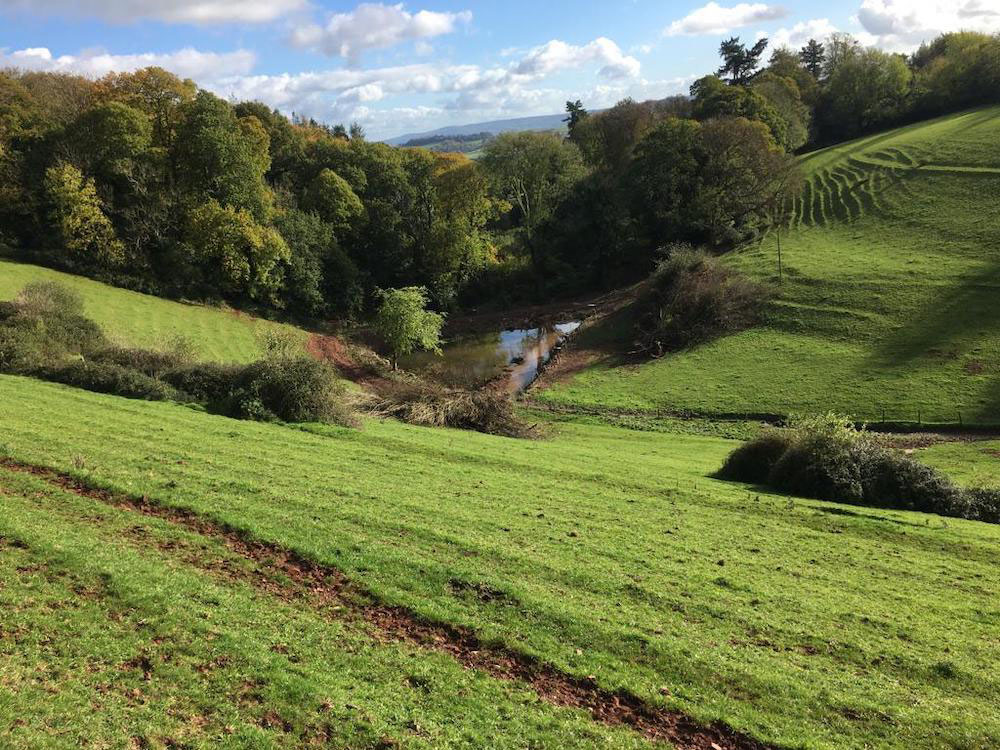
At Cornish Farm west of Orchard Portman, the landowner agreed to a request from Highways England to help reduce flooding on the M5 at Shoreditch. Numerous visits were made by FWAG SW advisers, funded by the SRA. As mainly recommended, Highways England improved and desilted an existing concrete channel. Several measures were then taken to reduce water run- off and sediment flow from nearby fields down to that channel. Moves included 285 metres of ditching and hedging, three new gateways, and 750 metres of fencing to stop livestock from getting into watercourses and trampling banks and muddying them up. A large open field area has been split into smaller paddocks to help improve soil structure, grass management, and grazing rotation.
At Merriott north of Crewkerne, in a finely designed scheme part-funded by the SRA, 300 metres of the Merriott Stream has been de-culverted.
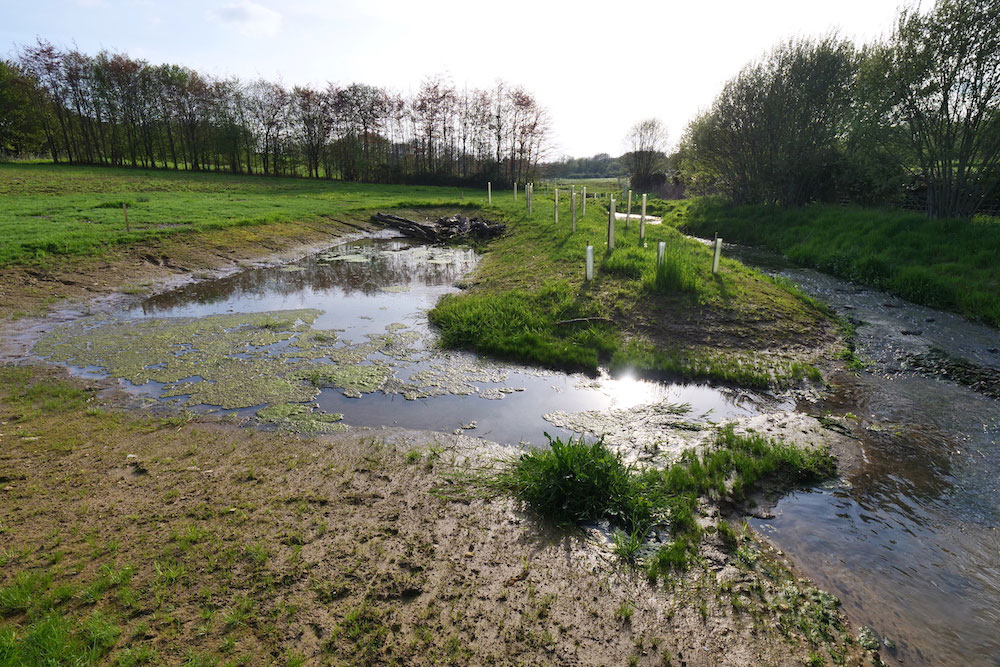
It now boasts a meandering channel and a range of features that will help to reduce flood risks to Merriott, improve habitats for wildlife and allow fish to move upstream and downstream more easily.
At Cannwood Farm near North Brewham, north-east of Bruton, the SRA funded the first phase of a wetland habitat creation project, in an area about 240 metres long and at its widest about 50 metres across. NFM activities included making a series of scrapes, ponds and bunds, partially filling-in an existing drainage ditch and re-meandering a stream channel.

Several further moves have been discussed, such as planting reedbed areas, and installing woody flow spreaders and leaky woody dams. FWAG advisers say the scheme has been a great success, with benefits demonstrated almost immediately for holding back peak flows of water. This scheme and the Merriott Stream work are both similar in spirit to the ‘Stage 0’ work on the National Trust’s Holnicote estate described on page 8.
Other 2022-23 NFM schemes, in summary, were:

Alhampton, two schemes on Mill House land, not far from the River Alham, Brue catchment, a 636 square metre pond and two swales, along with 0.247 hectares of tree planting part-funded by the SRA, near the pond, to help further slow the flow of water;
Brompton Ralph, two schemes on Old Rectory land, two scrapes and a soil bund to direct water into two ponds, then a series of leaky dams to further slow the flow;
Lydeard St Lawrence, Higher Preston Farm, flow pathway into Doniford Stream, pond de-silting, coir rolls installation;
Maidenbrook country park, for West Monkton Parish Council, four leaky dams and a bank regrade to create a larger backfill pool of water;
Maundown, near Wiveliscombe, six concrete cross- drains and six woody debris flow spreaders along the Challick Wood House track to help reduce runoff down to Blackwater Lane;
Wheddon Cross, Triscombe Farm, part SRA-funded, pond de-silting, stream re-profiling, brushwood bundles, tree planting.