
Foreword by Somerset Rivers Authority (SRA) Chair Councillor Mike Stanton to SRA Annual Report 2025-26

This has been perhaps the most significant year since the SRA’s birth 11 years ago. It included completion of Phase 1 of our River Sowy – King’s Sedgemoor Drain (KSD) works, when in September the Parrett Internal Drainage Board (IDB) finished raising the banks of the KSD, a key link in discharging more water faster from the Levels and Moors. That combined with near-disastrous floods in January, a ministerial visit thereafter, then the May 2026 report of the government’s Climate Change Committee, means we are at a tipping point for the management of flood risk in Somerset.
With the help of the IDB, we got the Sowy- KSD work done at two thirds of the cost proposed by the Environment Agency (EA) three years before – despite the big increases in contracting costs since then. That reminds us of the constraints such a government agency has to work under, with multiple layers of contractor and real-term cuts in government funding.
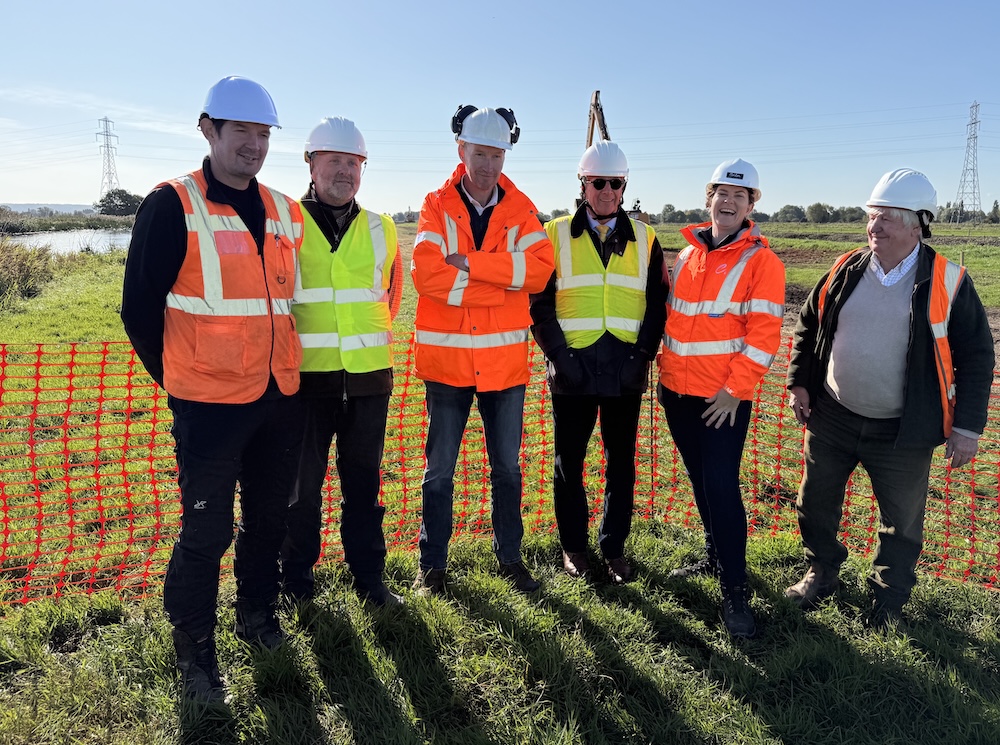
Our partnership arrangement proved itself this year. The EA and the IDBs delivered what was needed. Somerset Council responded to the Major Incident of floods declared in January in its usual efficient manner. All our MPs have been actively working to deal with flooding. And I am now a member of both local IDB Boards, and of the national Association of Drainage Authorities, representing all member councils in England: their Environment Day in Cambridgeshire was highly instructive.
We’ve learned how to manage the slow advance of flooding on the Somerset Levels and Moors, although we don’t always do so as well as it could be done. The EA stepped up quickly (though some say it could have been even quicker) to the January flood threat to Moorland and many other parts of the Levels and Moors. They brought in temporary pumps as soon as the set trigger points for that were in sight and they circumvented flow obstructions at bridges on the Northmoor Main Drain. And they pumped at Dunball, thus speeding up the outflow of the River Parrett to the Bristol Channel.
Flooding Minister Emma Hardy MP toured the floods close to their peak.

Subsequently, at the annual Flood & Coast national conference in Liverpool on 9 June, she announced a special one-off allocation of £50 million for Somerset Council, to be spent over the next couple of years on improving Somerset’s flood resilience and reducing flood risks.
Somerset Council’s officers and executive members are working with the SRA and other organisations on how to deliver this unexpected yet very welcome additional funding efficiently and wisely.
Meanwhile, at the SRA we are continuing to use our £3.2m per annum as efficiently and protectively as we can – while seeking a way to increase our funding in the mid to long term, so that we can sustain the useful benefits our partnership brings across Somerset.
Flash floods are becoming as big a threat as slow-advance floods. In my own village of South Petherton, two hours of January rainfall flooded 30 properties including our Co-op, for the second time in three years. I set up a local Flood Group which is now sorting out our problems: like many villages we have a small stream across an ancient flood plain which has been built on and narrowed, so that a storm makes it a raging torrent.
Flash floods receive less publicity because they tend to damage fewer properties and over a short time period. They need different solutions to moorland floods. Measurement and warning systems are key and being actively worked on and introduced.
Local organisations – parishes and local flood groups – will play an increasing role in our work. People locally know where the water comes from, where it goes, where the pinch points are. As in South Petherton, these are often the result of construction on flood plains over several centuries, stopping rivers and streams from spreading naturally, constraining them into raging torrents. Our new Community Flood Action Fund (CFAF) is already helping many communities reduce risk.
Climate change contributed to this year’s major flood risk events, and since then we have sweltered in the hottest May and June since records began. Scientists were warning of climate change in the 1960s when I was at university. By the 1980s it was becoming a serious political issue.
Now we are seeing the painful results – and it will get worse before it gets better. So we have much to do over the coming decade.
The SRA staff have been instrumental in our success: David Mitchell’s careful leadership of the team, Jonathan Hudston’s eloquent management of our communications and website, Bel Deering and Paul Elliston’s deft handling of community support, Caroline Dunn’s efficient project management, and Jennie Channing’s and Deborah Monk’s administrative control combine to create a happy team and organisational success. I thank them all; they have been a pleasure to work with.
But to really keep on with SRA success we need more funding for the SRA, partly so that we can also help to sustain in the mid to long term the benefits that will come from the spending of the £50 million. We are actively working on this SRA funding issue, and I hope to be able to report real progress on this soon.
Mike Stanton
